
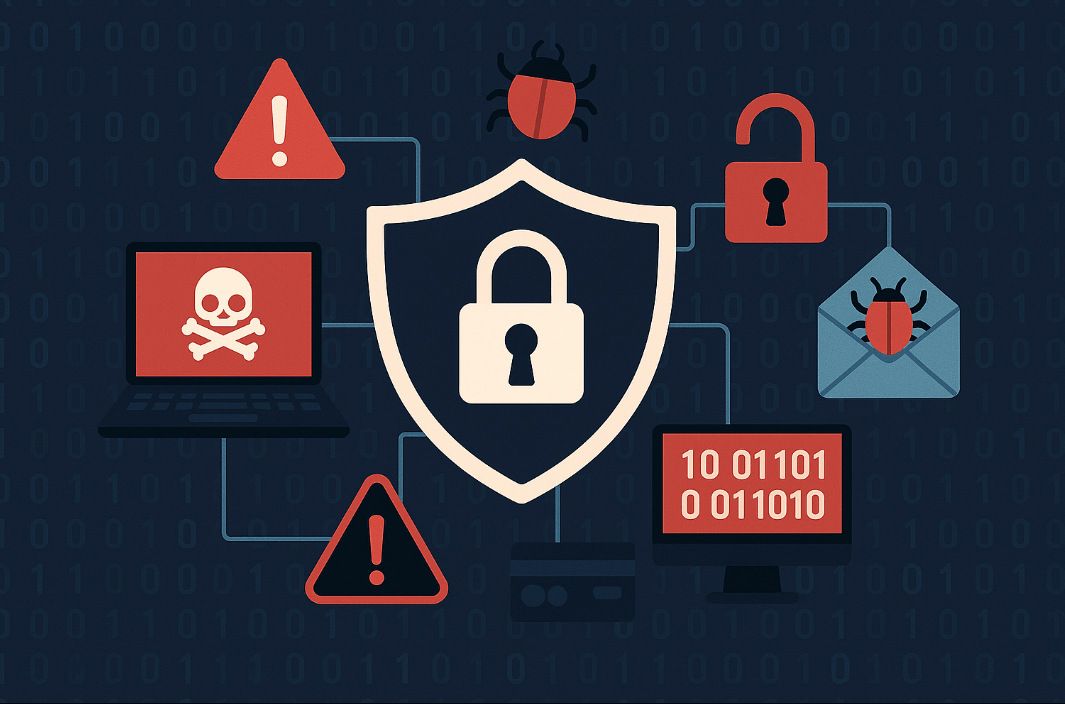
As digital transformation accelerates across industries, organizations face an increasingly complex threat landscape. The rise of artificial intelligence, cloud adoption, remote work environments, and connected devices has expanded the attack surface significantly. Understanding cybersecurity threats 2026 will bring is essential for building resilient security frameworks.
Modern cyber attacks are more sophisticated, automated, and financially motivated than ever before. In this guide, we explore the most critical emerging threats and outline enterprise defense strategies to stay ahead.
The Evolving Cyber Threat Landscape in 2026
Cybercriminals are no longer relying on basic phishing emails or simple malware. Threat actors now leverage automation, artificial intelligence, and advanced evasion techniques to bypass traditional security controls.
Key trends shaping cybersecurity in 2026 include:
- AI-powered attack automation
- Ransomware-as-a-service operations
- Cloud infrastructure exploitation
- Supply chain vulnerabilities
- Identity-based attacks
- Zero-day exploit acceleration
Organizations must adopt proactive, intelligence-driven security strategies rather than reactive approaches.
AI-Driven Malware Attacks
Artificial intelligence has become a double-edged sword. While enterprises use AI for threat detection, attackers use it to enhance malicious capabilities.
How AI Enhances Malware
- Automatically adapts code to avoid detection
- Identifies vulnerabilities faster than manual scanning
- Generates realistic phishing content
- Bypasses signature-based antivirus systems
AI-generated malware can mutate in real time, making traditional defenses less effective. As part of cybersecurity threats 2026, adaptive malware will remain a primary concern.
Advanced Ransomware Campaigns
Ransomware continues to dominate the cyber threat landscape. However, its tactics have evolved significantly.
Ransomware Trends in 2026
- Double and triple extortion techniques
- Targeted attacks on critical infrastructure
- Exploitation of backup systems
- Increased focus on small and mid-sized businesses
Attackers not only encrypt data but also threaten public data leaks, regulatory reporting, and direct customer exposure.
Ransomware-as-a-service models have lowered the barrier to entry for cybercriminals, expanding the scale of cyber attacks globally.
Cloud Security Breaches
As organizations migrate workloads to public and hybrid cloud environments, misconfigurations remain a major vulnerability.
Common cloud-related risks include:
- Insecure storage buckets
- Weak identity and access management policies
- Overprivileged user accounts
- API vulnerabilities
Cybercriminals actively scan cloud environments for configuration errors. In 2026, cloud exploitation is expected to remain among the most significant cybersecurity threats.
Supply Chain Attacks
Attackers increasingly target third-party vendors to infiltrate larger organizations. A compromised software provider can serve as an entry point into multiple enterprises.
Supply chain attacks are particularly dangerous because:
- They bypass perimeter defenses
- They leverage trusted relationships
- They spread rapidly across networks
Enterprises must perform thorough vendor risk assessments and continuously monitor third-party access.
Identity-Based and Credential Attacks
Passwords remain one of the weakest links in enterprise security.
In 2026, identity-based cyber attacks are expected to surge due to:
- Credential stuffing
- Phishing campaigns
- Session hijacking
- Exploitation of weak authentication protocols
Attackers prioritize identity compromise because it allows stealthy lateral movement within networks.
Internet of Things Vulnerabilities
The rapid expansion of connected devices introduces new entry points for attackers. Smart sensors, industrial devices, healthcare equipment, and office hardware often lack robust security controls.
Risks include:
- Default credentials left unchanged
- Outdated firmware
- Poor network segmentation
Unsecured devices can serve as gateways into critical enterprise systems.
Social Engineering and Deepfake Threats
Social engineering continues evolving with the help of artificial intelligence.
Emerging tactics include:
- AI-generated voice impersonation
- Deepfake video manipulation
- Hyper-personalized phishing campaigns
These attacks exploit human trust rather than technical vulnerabilities, making them particularly difficult to prevent.
Zero-Day Exploits and Faster Weaponization
Zero-day vulnerabilities are flaws unknown to software vendors at the time of exploitation. In 2026, the time between vulnerability discovery and exploitation continues to shrink.
Threat actors use automated scanning tools to detect and weaponize new vulnerabilities almost immediately, increasing enterprise risk exposure.
Enterprise Defense Strategies for 2026
To combat cybersecurity threats 2026 will bring, organizations must adopt a proactive and layered defense strategy.
Implement Zero Trust Architecture
Zero Trust assumes that no user or device should be automatically trusted, whether inside or outside the network.
Key principles include:
- Continuous authentication
- Least-privilege access
- Micro-segmentation
- Real-time monitoring
This model limits the impact of compromised credentials.
Strengthen Endpoint Detection and Response
Traditional antivirus solutions are no longer sufficient. Enterprises should deploy advanced endpoint detection and response tools capable of:
- Behavioral analysis
- Threat hunting
- Automated response actions
These systems help identify suspicious activity before it escalates.
Enhance Cloud Security Posture
Organizations must:
- Conduct regular cloud configuration audits
- Implement strong identity governance
- Use encryption for sensitive data
- Monitor API activity
Continuous visibility into cloud infrastructure reduces risk.
Employee Awareness and Training
Human error remains a leading cause of cyber attacks. Regular security awareness training should focus on:
- Phishing detection
- Password hygiene
- Social engineering tactics
- Incident reporting procedures
An informed workforce significantly reduces attack success rates.
Incident Response Planning
Enterprises must develop and regularly test incident response plans. This includes:
- Clearly defined escalation procedures
- Backup and recovery testing
- Communication protocols
- Legal and compliance readiness
Prepared organizations recover faster and reduce financial impact.
Threat Intelligence Integration
Proactive monitoring of emerging threat intelligence allows organizations to anticipate risks. Leveraging industry data and global threat feeds improves detection capabilities.
The Future of Cybersecurity in 2026
Cyber threats will continue evolving alongside technology advancements. Artificial intelligence, automation, and interconnected systems create new efficiencies — but also new vulnerabilities.
Organizations that prioritize continuous monitoring, proactive defense strategies, and adaptive security models will be better positioned to handle emerging cybersecurity threats.
Final Thoughts
The landscape of cybersecurity threats 2026 presents is defined by intelligent malware, advanced ransomware tactics, cloud vulnerabilities, and sophisticated social engineering campaigns. Modern cyber attacks are faster, more targeted, and more financially driven than ever before.
To remain resilient, enterprises must adopt layered security strategies, implement Zero Trust frameworks, invest in employee awareness, and continuously monitor evolving threats.
Proactive preparation today is the strongest defense against tomorrow’s cyber risks. Businesses that treat cybersecurity as a strategic priority rather than a technical afterthought will gain a significant competitive advantage in an increasingly digital world.